




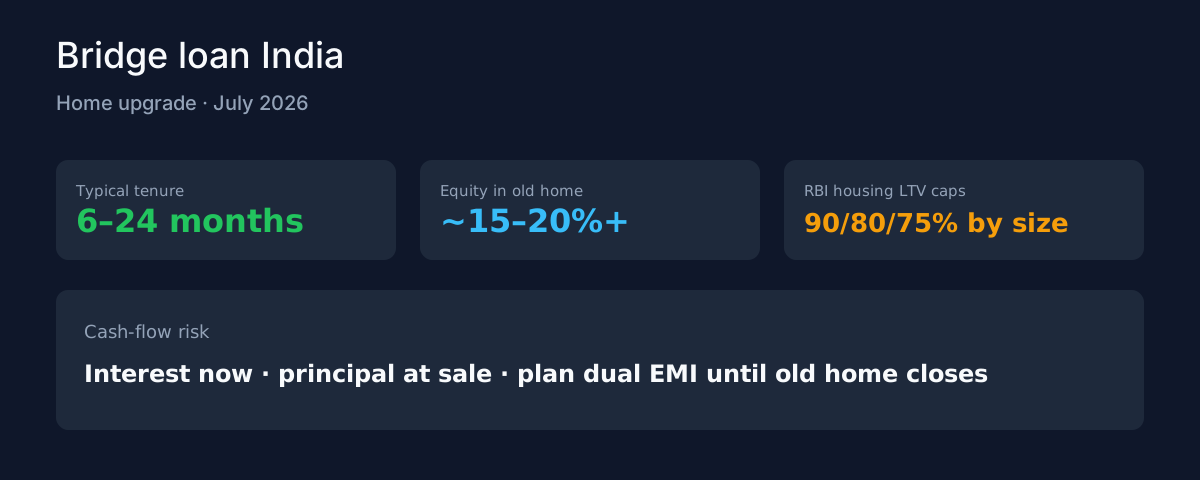
Bridge loan India (July 2026): a short-term facility from banks/HFCs that uses equity in your current home to fund the next purchase while the old property sells. Tenures are typically 6 months to 2 years; structure is often interest-only monthly with principal at sale. Expect lenders to want roughly 15–20%+ equity in the collateral home and LTV commonly in a 60–90% band of that property’s value (product-specific). This guide covers Indian housing finance products only.
What a bridge loan does
You buy (or book) a new home before the sale proceeds of your existing home arrive. The bridge loan plugs the gap; after sale, you repay principal (and often refinance residual into a regular home loan). Processing is marketed as faster than a full long-term mortgage (days to a few weeks), but dual obligations remain until the old home closes.
| Feature | Bridge loan (typical India) | Regular home loan |
|---|---|---|
| Tenure | 6–24 months | Up to ~20–30 years |
| Repayment | Interest monthly + bullet principal | EMI principal+interest |
| Security | Existing home (and often new home docs) | Property financed |
| Purpose | Gap until sale / takeover timing | Long-term purchase finance |
| Prepay | Often free early close | Policy / RBI floating rules |
LTV and regulatory housing caps
Bridge products are secured lending. Illustrative equity requirement: 15–20% in the existing home. Product LTVs cited by lenders/HFCs often land between 60% and 90% of collateral value. RBI/NHB housing LTV caps for standard home loans (when the bridge converts or sits beside a long-term HL):
| Loan size | Max LTV (regulatory band) |
|---|---|
| Up to ₹30 lakh | Up to 90% |
| Above ₹30L to ₹75L | Up to 80% |
| Above ₹75 lakh | Up to 75% |
SBI-style gap product notes (illustrative)
SBI markets bridge/gap funding linked to home products (sometimes near top-up language). Public parameters cited in research: amounts from about ₹20 lakh upward, tenure up to 2 years, illustrative rates roughly 9.5–10.5% class — confirm current SBI sheet. HDFC and other banks/HFCs run analogous short-term secured gap products.
Documents
- KYC (PAN, Aadhaar), income (salary slips/ITR), 6-month bank statements.
- Both properties: title chain, tax receipts, sale agreement for new home, valuation, encumbrance checks.
- Existing loan statement if any; clean repayment trail helps.
Risks
- Dual EMI / interest stack: old HL + bridge interest until sale.
- Sale delay: tenure ends before buyer closes — refinance risk.
- 90+ DPD → NPA: bureau damage on CIBIL/other CICs.
- Hard enquiries: multiple HFC applications stack.
- Stamp duty / registration: cash outflows still hit.
| Alternative | When it fits | Watch |
|---|---|---|
| Home top-up | Existing HL with surplus LTV | May be rebranded as bridge at some banks |
| Loan against property | Need flexible end-use | Longer process; rate vs HL |
| Personal loan | Small short gap only | Unsecured, higher APR |
| OD home loan (Maxgain-style) | Park sale proceeds later | Needs surplus cash discipline |
Clean credit reports before applications. For business gap funding see business credit.
Bridge loan readiness · July 2026
Before you apply for an India home bridge loan, map three cash lines: (1) existing home loan EMI if any, (2) bridge interest, (3) new home EMI after conversion. Lenders underwrite equity in the current home (often 15–20%+) and short tenures of 6–24 months.
| Check | Why |
|---|---|
| Buyer LOI / listing for old home | Sale timeline realism |
| Title clear on both properties | Security creation |
| CIBIL clean | Hard enquiries stack |
| Interest-only cash buffer | Dual payment period |
Structure is usually monthly simple interest plus bullet principal at maturity/sale. Many products allow early prepay without penalty — confirm in writing. Regulatory housing LTV caps (90/80/75% by loan size bands) still matter when the long-term home loan replaces the bridge.
Get two bank/HFC term sheets the same week before booking the new home.
Next
Get written sale timeline assumptions into the sanction conditions before you book the new home.
July action
Prefer written sale-extension clauses. Do not book the new home on a verbal bridge promise.
Keep sale agreements and valuation reports with the sanction letter. Keep sale agreements and valuation reports with the sanction letter. Keep sale agreements and valuation reports with the sanction letter. Keep sale agreements and valuation reports with the sanction letter. Keep sale agreements and valuation reports with the sanction letter. Keep sale agreements and valuation reports with the sanction letter.